
Pitch Diplomacy: Football, Statecraft, and Soft Power in the Middle East Since 1990 (Dr Joseph Yu)
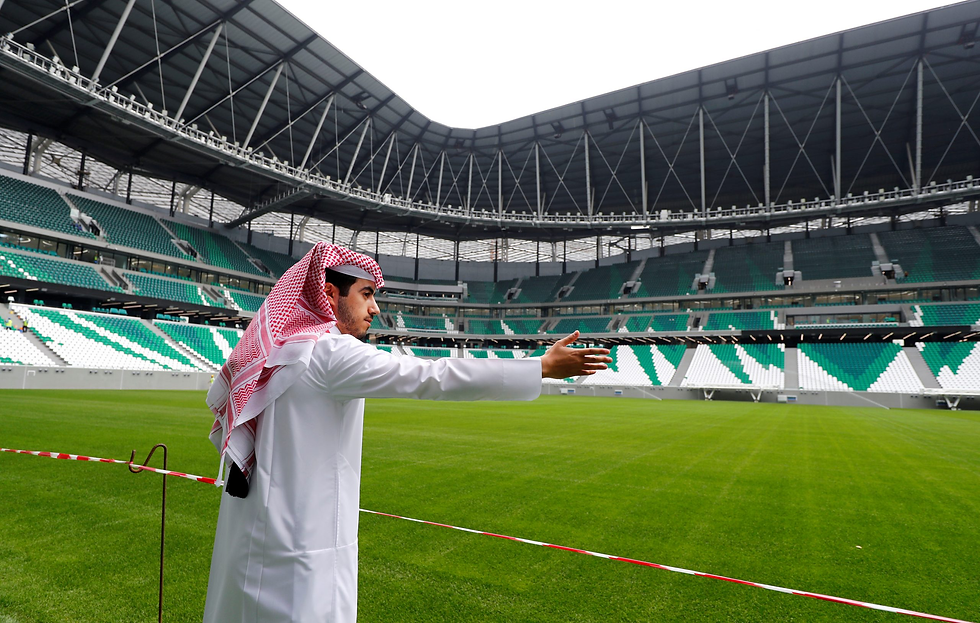
It can be said that major sporting “mega events” now represent the different meanings and strategies of soft power (Al-Dosari, p.1). Soft power is a concept developed by Joseph Nye (1990, 2011), which refers to the ability of a state to influence others through attraction, culture and image rather than coercion or military force. He distinguishes between hard power (military and economic coercion), soft power (attraction and persuasion), and what he later calls “smart power”, a combination of both. Unlike hard power, which relies on economic sanctions or armed strength, soft power works by shaping how a country is perceived internationally. In the Middle Eastern context, sport functions as a form of cultural capital and a global spectacle capable of reaching billions of people. Since the 1990s, Gulf states such as Qatar, the United Arab Emirates (UAE), and Saudi Arabia have invested heavily in football as part of broader strategies to enhance their global reputation. In recent years, sports diplomacy has become “a central pillar of Qatari foreign policy” (Al-Dosari, p.3), illustrating how sport can be integrated into state strategy. Football in particular is significant because it is the world’s most popular sport, and the FIFA World Cup is arguably the largest single-sport event globally. Hosting or controlling football institutions therefore offers an unparalleled platform for international exposure. Supporters describe these policies as nation branding and international integration, while critics dismiss them as “sportswashing”, arguing that sport is being used to distract from human rights abuses. This essay will argue that football has unquestionably been used as a deliberate tool of soft power in the Middle East, especially by Qatar and the UAE. However, its effectiveness is uneven. While it has significantly increased visibility and influence, its success depends on political credibility. In some cases, especially Saudi Arabia, controversy has limited its impact.
Recent scholarship provides a strong foundation for understanding football as soft power in the Middle East. Al-Dosari argues that sporting mega-events represent “different meanings and strategies of soft power” (Al-Dosari, p.1) and shows that in Qatar, sports diplomacy became “a central pillar of foreign policy” (Al-Dosari, p.3). Her work demonstrates that football investment is deliberate and strategic. However, she focuses mainly on Qatar and does not compare its effectiveness with other Gulf states. This essay extends her argument by offering a comparative evaluation. Similarly, Carosella (2022) examines football in Qatar, the UAE and Saudi Arabia, arguing that these states use sport to “project a narrative of progress, modernity and openness.” His comparative framework informs the structure of this study. However, while he shows clear strategic intent, he gives less attention to measuring long-term reputational impact. This essay therefore moves beyond intention to assess effectiveness. On the other hand, El-Dabt et al. (2025) discuss “sustainable strategic nation branding” through mega-events, suggesting that sport can support economic diversification. Yet they pay scant attention to backlash and political controversy. In contrast, through examining the 2022 World Cup within debates over “sportswashing,” Huddleston and Crisp (2025) shows how Western media framing can shape international interpretation of sporting events, arguing that the World Cup became central to discussions about legitimacy and human rights. However, they do not offer a broader regional comparison or explore alternative models such as the UAE’s ownership strategy. My essay expands the discussion by placing Qatar within a wider comparative framework. Furthermore, focusing on Saudi Arabia’s strategy within Vision 2030 and the wider regional trend, Al Saeed (2024) analyses sports diplomacy in Arab countries more generally, arguing that sport increasingly functions as an instrument of foreign policy. However, it tends to describe sports diplomacy as part of image construction without fully interrogating whether that image is persuasive internationally. This essay seeks to fill that gap by examining credibility and scepticism, particularly in the Saudi case.
Case Studies
For Gulf states, football investment aligns with strategic goals. These include economic diversification beyond oil, projecting an image of modernity, and countering post-9/11 narratives that associate the region with extremism or instability. As Carosella explains, football has been used to “project a narrative of progress, modernity and openness to the international community” (Carosella, 2022). Thus, sport is not simply entertainment but a deliberate instrument of image management. Qatar’s use of football represents the clearest example of mega-event soft power in the region. Winning the bid to host the 2022 FIFA World Cup allowed Qatar to place itself at the centre of global attention in a way that would have been impossible through traditional diplomacy alone. As Al-Dosari argues, sports diplomacy became “a central pillar of Qatari foreign policy” (Al-Dosari, p.3), indicating that the World Cup was not simply about sport but about state strategy. By hosting the first World Cup in the Arab world, Qatar sought to redefine how the region is perceived, presenting itself as modern, technologically advanced and globally connected. The scale of investment, such as building new stadiums, transport infrastructure, and urban regeneration, symbolised national ambition. Mega-events can function as “strategic nation branding” tools when linked to development agendas (El-Dabt et al., 2025). In this sense, Qatar successfully projected competence and organisational capacity. Furthermore, the tournament strengthened Qatar’s diplomatic profile, particularly following the 2017–21 Gulf crisis, during which international partnerships became increasingly important. However, Qatar’s strategy also exposed the risks of high-visibility soft power. The intense global spotlight meant that criticisms regarding migrant labour conditions and LGBTQ+ rights received unprecedented attention. Huddleston and Crisp describe the 2022 tournament as a defining example in debates over “sportswashing” (Huddleston & Crisp, 2025). This suggests that while Qatar controlled the spectacle, it did not control the narrative. The very openness required for soft power created opportunities for scrutiny. Therefore, Qatar demonstrates that mega-event soft power is double-edged: it maximises attention but also magnifies criticism. Its strategy was effective in increasing recognition, yet less successful in eliminating reputational challenges.
The UAE’s strategy differs significantly because it is less reliant on single events and more focused on institutional integration. The 2008 acquisition of Manchester City by Abu Dhabi United Group embedded Emirati capital within one of the world’s most commercially powerful football leagues. Rather than hosting a global spectacle, the UAE pursued influence through ownership and long-term participation in the global football economy. Carosella argues that football ownership enables states to “project narratives of modernity and global engagement” through association rather than spectacle (Carosella, 2022). Manchester City’s sporting success, including multiple Premier League titles and a Champions League victory, has generated consistent positive exposure. Unlike Qatar’s concentrated moment of attention, the UAE benefits from repeated annual reinforcement of its association with success and excellence. Importantly, the club’s brand often operates independently from Emirati politics in the minds of many fans. This distance reduces the intensity of backlash compared to Qatar’s World Cup. Although human rights concerns are periodically raised, they rarely dominate global headlines in the same way. The UAE model therefore appears more sustainable and less vulnerable to sudden reputational shocks. It represents a form of embedded soft power, where influence accumulates gradually through normalised participation. However, this subtlety also limits the scale of transformation. Ownership may improve associations with wealth and modernity, but it does not fundamentally reshape global political perceptions. The UAE case therefore illustrates a more stable but less dramatic form of soft power: effective in maintaining positive visibility, yet less capable of producing transformative shifts in international attitudes.
Saudi Arabia’s football diplomacy is the most recent and arguably the most ambitious. Under Vision 2030, the kingdom has invested heavily in the domestic Saudi Pro League and expanded into European football through the 2021 Newcastle United takeover. This strategy seeks to diversify the economy, attract tourism, and reposition Saudi Arabia as an emerging global entertainment hub. Al Saeed notes that sports diplomacy in the Arab world increasingly serves as an instrument of foreign policy and image construction (Al Saeed, 2024). For Saudi Arabia, this image reconstruction is particularly urgent due to international criticism following the murder of Jamal Khashoggi and the ongoing Yemen conflict. Football provides a platform for projecting reform, modernisation and youth engagement. However, Saudi Arabia’s case highlights a key limitation of soft power: attraction cannot be purchased solely through financial investment. While high-profile player transfers generate media attention, they do not automatically translate into admiration or legitimacy. In contrast to the UAE’s gradual integration, Saudi Arabia’s rapid expansion has intensified scrutiny. Many Western commentators explicitly frame Saudi investment as “sportswashing,” suggesting that the strategy is perceived as reactive rather than organic. This demonstrates that soft power requires credibility. When political controversies dominate international narratives, sporting initiatives struggle to redefine perception. Saudi Arabia has successfully increased its global football presence, but whether this presence produces genuine influence remains uncertain. Thus, the Saudi case underscores that visibility without legitimacy can limit the effectiveness of soft power.
Comparing the three cases reveals not only different strategies, but different levels of effectiveness and risk. Qatar pursued maximum visibility through hosting the 2022 World Cup, achieving unprecedented global exposure but also attracting concentrated criticism. The UAE adopted a quieter, long-term model through club ownership, embedding itself within global football structures in a way that appears more sustainable and less politically exposed. Saudi Arabia, meanwhile, has relied on rapid and high-profile financial expansion, generating immediate attention but struggling with persistent scepticism. The contrast between Qatar and the UAE is particularly significant. Qatar’s mega-event strategy created a singular moment of global focus. The first World Cup in the Arab world produced dramatic symbolic impact, but also invited intense scrutiny. In comparison, the UAE’s ownership model operates through repetition and normalisation. Rather than one defining moment, it benefits from consistent annual reinforcement. This suggests that soft power may function more effectively when it is cumulative and gradual rather than concentrated and spectacular. Saudi Arabia adds a further dimension to the comparison. Unlike Qatar, which framed its World Cup within a broader narrative of mediation and diplomacy, Saudi Arabia’s football investment has been closely linked to image repair. This difference in perceived motivation affects credibility. Where sporting initiatives align with broader, coherent reform narratives, they appear more authentic. Where they are seen primarily as reputational damage control, they may generate scepticism. These comparisons raise key analytical questions: does exposure automatically produce influence? Can sport override entrenched political realities? The evidence suggests that football has clearly been used strategically across all three states. However, effectiveness depends on context. Soft power works best when sporting initiatives are consistent with wider policy reforms and when international backlash remains manageable. Where political contradictions are too prominent, sport cannot fully compensate. Therefore, football enhances visibility far more reliably than it transforms political reputation.
Conclusion
Football has undoubtedly been used deliberately as a tool of soft power in the Middle East since 1990. Qatar’s hosting of the 2022 World Cup, the UAE’s long-term ownership of Manchester City, and Saudi Arabia’s rapid expansion under Vision 2030 all demonstrate conscious attempts to shape international perception through sport rather than coercion. These initiatives reflect an understanding of Nye’s argument that influence increasingly depends on attraction and image rather than force. However, the extent of success varies considerably. The UAE’s embedded, long-term strategy appears the most stable and sustainable, generating continuous positive association with excellence and modernity while avoiding the intense scrutiny faced by mega-events. Qatar’s World Cup achieved extraordinary visibility and symbolic significance, yet it also amplified criticism, demonstrating that high exposure carries reputational risk. Saudi Arabia’s case illustrates most clearly the limits of soft power: financial investment and global headlines do not automatically translate into admiration or legitimacy. Ultimately, football can amplify a state’s presence on the global stage and create platforms for engagement, but it cannot erase political realities. Soft power is conditional and relational. It depends on credibility, coherence and international context. In the Middle East, football has become an important diplomatic instrument, yet its capacity to transform political reputation remains constrained. Visibility is achievable; genuine attraction is far more complex.
References
Al-Dosari, N. (2021) ‘Sport and International Relations: Qatari Soft Power and Foreign Policy Making’, Tajseer, 3(2), Special Issue: Culture as a Tool of Soft Power, pp. 145–170.
AlSaeed, N. (2024) ‘Sports Diplomacy in Arab Countries: Sports as Soft Power in Foreign Policy’, Journal of Ecohumanism, 3(7), pp. 3145–3158. doi: 10.62754/joe.v3i7.6552.
Carosella, V.R. (2022) Football as Soft Power: The Political Use of Football in Qatar, the United Arab Emirates and the Kingdom of Saudi Arabia. Abdou Filali-Ansary Occasional Paper Series, Book 8.
El-Dabt, L., AlReshaid, F., Park, K., AlBuloushi, N. and Al-Enzi, A. (2025) ‘Sustainable strategic nation branding through sports: leveraging soft power via mega-event hosting’, Frontiers in Sociology, 10, 1521396. doi: 10.3389/fsoc.2025.1521396.
Huddleston, A. and Crisp, P. (2025) ‘Football, the 2022 Qatar World Cup, and Sportswashing: Do Western perspectives recognise the dangers of Edward Said’s concept of Orientalism in their approach?’, Journal of Emerging Sport Studies, 11.
Nye, J. S. (1990). Soft Power. Foreign Policy, 80, 153–171. https://doi.org/10.2307/1148580
Nye, J. S., & Goldsmith, J. L. (2011). The Future of Power. Bulletin of the American Academy of Arts and Sciences, 64(3), 45–52. http://www.jstor.org/stable/41149419

Comments