
Bread and Statecraft: Impact of Caesarian Reforms on Rome’s Food Security, 46–44 B.C. (Joseph Yu)
In the late stages of the Roman Republic (46 to 44 B.C.), the capital of Rome faced a significant challenge in maintaining food security, which refers to stable access to sufficient, safe, staple foods at affordable costs for its urban populations. Grain imports from different key regions, such as Sicily, Egypt, and North Africa was of vital importance to Rome. However, it had also exposed the weaknesses within their supply system known as Cura Annonae (management of food supply). Grain imports from different key regions, such as Sicily, Egypt, and North Africa was of vital importance to Rome. However, it had also exposed the weaknesses within their supply system known as Cura Annonae (management of food supply). This system required an extensive amount of planning and transporting to ensure that there was a sufficient amount of grain shipments into the port of Ostia before being distributed towards Rome’s many districts. This dependency made Rome incredibly vulnerable to grain shortages, potentially destabilizing the Republic. In response, Rome established the Frumentatio (grain dole), which subsidized 320,000 Roman citizens with grain, a welfare system that excluded slaves and non-citizens. Although this policy had proved vital in assuring that grain remained accessible and affordable to Rome’s urban population, it had become increasingly difficult to manage logistically, administratively, and financially. As a result, Julius Caesar implemented a whole series of social and economic reforms to address these deteriorating conditions in 46 B.C. These challenges align with contemporary vulnerabilities in our food supply and security, such as those exposed during the COVID-19 pandemic.
This essay will analyze how far Caesar’s social and economic reforms (46-44 BCE) improved the food security for Roman Citizens. Improvement will be measured by accessibility (eligibility and trade barriers), stability (supply risk), and affordability (the cost for citizens and the financial impact on the state treasury). Marking Rome's transition from republicanism to an autocracy, Caesar's reforms were significant because it fundamentally changed how Rome managed its urban food supply. This essay will explore the causal relationship between Caesar’s reforms, their short and long-term impacts, as well as examine patterns of change and continuity. Using primary and secondary sources it provides us with an insight into how Caesar approached food security. On one hand, primary sources such as Suetonius' The Twelve Caesars and Cassius Dio's accounts reflect the social and economic impacts of Caesar's reforms. On the other hand, secondary sources like Erdkamp's analysis of Roman logistics of food supply and Aly's study of Caesar's social policies, offer a more contemporary interpretation from a more analytical approach. Through investigating the effectiveness of Caesar’s societal and economic reforms are examined, reaching the conclusion that Caesar's reforms improved administrative efficiency, yet simultaneously limited grain accessibility for Roman citizens.
Rome’s Grain Crises
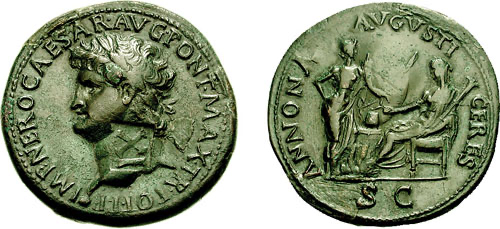
Rome’s expanding population between 46 and 44 B.C. placed a large amount of pressure on its grain distribution system, exposing the weaknesses of its administrative and logistical system. The curra annonae, named after Annona (goddess of harvest), represents the backbone of Rome’s food supply. It relied on a network of transport and storage, with large amounts of grain imports from provinces such as Egypt and North Africa. Grain was transported via the Mediterranean to the port of Ostia and then along the Tiber River to Rome. The Grain dole, managed by officials known as Curatores Annonae (caretakers of the grain supply), controlled the influx and distribution of grain, with eligibility determined by social and economic status. This system, while only prioritizing impoverished citizens, those who are unable to meet the criteria were forced to face high market prices, or rely on patronage, often resulting in a great deal of debt (Moon).
The growing population of Rome placed an enormous amount of strain on the grain dole. Writing over half a century later, Roman historian Suetonius explains that the logistical infrastructure, which was important for maintaining social stability, struggled to meet the rising demands of the 320,000 recipients (Suetonius 41). The source is however limited by Suetonius’s anecdotal, dramatic writing style, and that he did not witness the event himself. Yet, his position as imperial secretary allowed unparalleled access to Roman archives, official correspondence and administrative records, increasing the reliability of his numerical data (Kershaw). The problem was further exacerbated by Caesar’s conquests in Gaul (58 to 50 B.C.), which expanded Roman territory, adding parts of modern-day France, Belgium, Switzerland and Germany, to the Roman Empire (McShane and Watkins). Corruption and mismanagement within the grain dole system, where magistrates manipulated allocations for personal loyalty and political gain, a practice that was already evident in the populist policies of earlier figures like Clodius Pulcher (Rising). These abuses not only limited access for those in genuine need but also highlighted the deep-rooted inequalities within Roman society. The grain dole, while designed as a tool for social welfare, increasingly became a means of political control.
The mass population displacement also worsened Rome's logistical and administrative capacity to organize and manage, as a result of the sudden expansion of territory and the influx of new population. Cassius Dio states that ‘the multitude receiving doles of corn had increased enormously, not by lawful methods but in such ways as are common in times of strife’ (Cassius Dio 43.21). This reveals how corruption during unrest increased illegal dole recipients. However, the value of Dio’s accounts was limited as he wrote 250 years after the reforms. Moreover, he often prioritized dramatic storytelling over factual accuracy, neglecting details like numbers or dates just to fit with his narrative and purpose of writing. Nevertheless, as a Roman senator and historian, Dio’s work is valuable for preserving early accounts that reflected Roman administrators’ understanding of general social issues, such as corruption. Additionally, Caesar’s successful conquest of Gaul between 58 to 50 B.C. profoundly altered Rome’s demographic composition, In his Commentarii de Bello Gallico, Caesar documents the forced migration of the Helvetii tribe: “The Helvetii nonetheless tried to put their previous decision into action by emigrating from their own land,” burning their villages to prevent retreat and pillaging neighboring territories (Caesar 1.29). He claims that of the 368,000 who migrated, only 110,000 returned, with the remainder either killed or enslaved (Caesar 1.29). However, the remarkably detailed record of names of tribes, according to historian Henige (217), suggest that these sources might not be reliable, as he deemed it an impossible task to achieve at the time. This reveals that Caesar may have exaggerated and manipulated these figures to glorify his military achievements and justify his reputation.
Economically, the grain dole imposed a significant amount of economic strain on Rome's resources, particularly in terms of the procurement of grain, storage, transportation and distribution. Yet, it also guaranteed a stable demand for grain imports, which benefited merchants and grain suppliers who organized these shipments and trade networks to supply Rome's massive urban population. As Erdkamp explains, the grain trade was a cornerstone of the Roman economy, and the state’s involvement ensured predictable markets. Maritime transport was the preferred method due to its cost-effectiveness (Temin), making the Mediterranean route essential for sustaining Rome’s food supply. However, this over-reliance on maritime routes introduced new vulnerabilities. Widespread piracy posed an ongoing threat to grain shipments, ending with the sacking of Rome’s own harbor, Ostia, in 67 B.C., which prompted Pompey’s anti-piracy campaign (Fairbank). The state was forced to invest heavily in naval patrols and infrastructure to protect its supply lines, which increased the overall cost of the grain dole. Moreover, the scale of the operation was immense, with the grain dole accounting between 20 to 30% of Rome’s total grain supply, with annual distribution reaching around 63,000 tons of grain to feed between 150,000 to 320,000 eligible recipients (Butterfield). However, the value of these sources are limited as ancient records are often incomplete and historians use different methods to calculate population and consumption. Despite these additional expenditures, the economic benefit outweighs its risks because it allowed for cheaper grain prices and stable food markets. Nevertheless, managing this complex balance between benefits and costs strained Rome’s treasury, as officials struggled to sustain the massive expenditures while fulfilling other state responsibilities.
In short, before Caesar became dictator for life, the Roman grain distribution system was already plagued with structural and practical weaknesses. Amid increasing demographic pressure from the various conquests and natural population growth, the high cost of maintaining and securing the Mediterranean supply route drained the state’s resources. These problems were made worse with rampant corruption. Grain supply was also a political issue as it was deeply tied to the legitimacy of Roman leadership. With Roman food security at stake, Caesar intervened to stabilize the distribution system. Nevertheless, rather than being purely altruistic, Caesar’s policies must be viewed within the broader framework of consolidating power and stabilizing the capital. The grain crisis was not merely a logistical problem, but also a social fault line that Caesar sought to manage through centralized reform.
Caesar’s Reforms
Julius Caesar’s reforms (46-44 BCE) fundamentally restructured Rome’s grain distribution system, serving as a critical response to existing inefficiencies and corruption. While the new administrative frameworks successfully addressed some of the shortcomings, they also revealed significant social and economic limitations, ultimately tightening Caesar’s control over the urban plebs and signaling deeper systemic issues within the Republic.
Upon his ascension to power (45 BCE), Caesar initiated an overhaul of Rome’s grain distribution system. Firstly, he appointed two new plebeian Aediles, known as the Aediles Cereales, in 46 BC, who were magistrates specifically tasked with overseeing the grain supply (Long 20). Additionally, Caesar implemented policies to consolidate and reorganize the eligibility criteria for grain subsidies. By instituting stringent documentation requirements through record-keeping and conducting comprehensive reviews of the recipient list by districts (Aly 20), he reduced the number of beneficiaries from approximately 320,000 to 150,000 (Suetonius 41). While Suetonius provides crucial details, his account is limited by its biographical focus, which may lead to selective reporting and an emphasis on moral lessons rather than historical accuracy. The lack of verification due to the absence of detailed administrative records to support these figures also raises questions about the objectivity and comprehensiveness of his account. Thirdly, comprehensive reviews of the grain dole recipient list were enacted to verify the authenticity of individuals receiving grain subsidies. Through these measures, Caesar aimed to enhance the productivity of existing practices rather than creating an entirely new system, which reflects a pragmatic approach to governance but also indicates a reluctance to confront deep-rooted issues.
The establishment of the Aediles Cereales marked a significant improvement in the efficiency of Roman grain distribution. By centralizing oversight, the reforms reduced corruption and enhanced accountability, addressing the previous system’s deficiencies (Aly 18-20). However, this centralization came at a cost. The drastic reduction of grain recipients intensified the financial strain on vulnerable populations. Many low-class Roman citizens, who relied on the grain dole for survival, found themselves excluded from this critical support, intensifying their hardships. This exclusion not only deepened existing social inequalities but also created a dependency culture on state-subsidized grain, which had become ingrained in the social fabric of Roman life. The reforms introduced procedural barriers such as the need for the head of household to appear in person before the sensors, swear an oath, and provide details of their family lineage to verify their status. This further marginalized the population, as the illiteracy rate among the populace was likely over 90%, making it difficult for many to navigate the new documentation processes (Harris 22). However, the value of Harris’ account is limited, as his statistics applied to the entire Roman Empire, ignoring the fact that wealthy, educated elites concentrated within the city of Rome. Nevertheless, such bureaucratic requirements undoubtedly posed significant risks of exclusion for the very populations that the reforms aimed to assist. Moreover, the reforms reinforced a troubling pattern of dependency on grain subsidies. By associating the grain dole further with the right of citizenship, the reforms created risks of social unrest should subsequent rulers carry out significant changes to the system (Aly 20). In other words, the state came to be seen as the provider and stabilizer ("Grain Dole"), which complicated future reforms. This dependency extended beyond just the grain distribution, as the state had to increase control over farms, land and grain storage facilities to ensure a stable supply of grain.
The economic implications of Caesar’s reform to the grain dole system revealed several limitations. By providing Rome with a stable source of food supply, this welfare system allowed for many citizens to live in Rome without engaging in manual agricultural labor, thereby fostering a large urban workforce and consumer base crucial for growth and functioning of Rome’s economy while maintaining its status as the imperial capital (“Grain Dole”). Through Caesar’s grain dole reforms by reducing the number of eligible recipients, it only temporarily alleviated the economic strains as the grain dole represented a considerable expense for the Roman Republic as Plutarch states that the annual cost was 7.5 million drachmas, which placed an immense pressure on the state treasury (Plutarch, Life of Caesar). However, Plutarch’s reliability as a historical source required scrutiny, as his purpose was to explore moral character and leadership rather than to provide precise economic data and present objective history. This means the Greek biographer’s focus on moral storytelling could have led him to exaggerate figures or select anecdotes that support his philosophical arguments. Further, it was written 150 years after Caesar’s death, so relied on secondary sources or oral traditions. Nevertheless, his position as a priest of Apollo Delphi granted him access to many historical records and traditions (McInerney), so his account is useful for understanding how later generations of elites perceived Caesar's long-term legacy. With such a substantial financial burden, to ensure its continuity future emperors were compelled to subsidize this system personally (“Grain Dole”).
In short, Caesar’s reforms of Rome’s grain distribution system achieved both administrative improvements particularly in reducing corruption and enhancing oversight. The creation of the Aediles Cereales and the tightening of eligibility criteria streamlined the system and prevented abuses. However, these grains came at the expense of social equity, as many impoverished citizens were excluded, which directly impacted food security in Rome. Moreover, the persistent financial burden of the grain dole and the political risks associated reveal the structural challenges of maintaining a stable and affordable food supply. Ultimately, while Caesar’s reforms improved the efficiency and stability of grain distribution, they did not fully resolve the underlying issues of accessibility and affordability. This suggests that the reforms to a small extent improved food security for Roman citizens and were equally motivated by Caesar’s desire to consolidate political control from a collective governance to a unilateral authority during a period of systemic crisis.
Impact of Caesar’s Reforms
Caesar’s reforms had mixed outcomes: on the one hand they transformed food security in Rome, but on the other they limited accessibility and led to a further social inequality. The most immediate and measurable impact was the streamlining of the distribution system. Caesar improved oversight and accountability, allowing the state to better manage resources and reduce fraudulent claims. The stricter administrative controls and new distributive methods also improved the system’s efficiency. However, at the same time they expose the fundamental difficulties in maintaining social welfare. This duality is particularly evident in the reduction of the recipient list, reducing the number of eligible grain recipients from 320,000 to 150,000 citizens, while this decrease strengthened Rome’s administrative control, it also compromised widespread food security across Rome’s impoverished population, the exclusion of 170,000 citizens raises the question of whether Caesar’s reforms was truly a necessity or deliberate control over the population. Moreover, these reforms also highlighted the conflict between balancing social and economic stability as the achievement of one came at the expense of another. Rather than empowering the citizens, Caesar’s system created a dependency culture and a paradox where efficiency came through exclusion. This demonstrates how reforms aimed to improve the system’s efficiency often required a compromise at the cost of the people.
The huge social implications of Caesar’s reforms fundamentally reshaped Roman society for centuries to come, as Augustus and his successors all expanded and built upon Caesar’s grain distribution system. Following Caesar’s assassination (44 B.C.), many of his policies fell into neglect, with the grain distribution recipient list dramatically increasing from Caesar’s 150,000 limit to 250,000 and eventually 320,000. Augustus addressed this issue by implementing a limit of 200,000 on the recipient list and renewed many of Caesar’s regulations, while he considered abolishing the grain distribution system due to their negative impact on Roman agriculture, he maintained a modified system where many citizens received a monthly distribution of five modii of corn for a small fee (Long 19). Additionally, Augustus would adapt Caesar’s policy by establishing a permanent office called the praefectus annonae, a position that’s dedicated to oversee Rome’s method of distribution and supply of grain, as towards the end of his reign, this office position would expand to include key locations including Rome, Ostia and Puteoli to manage grain collection from Sicily, Sardinia and Africa (Erdkamp).
The continuation of these policies under subsequent Emperors like Augustus demonstrates the fundamental effectiveness of Caesar’s reforms. After a brief disruption following Caesar’s death, Augustus decided to reinstate the strict numerical limits and enhance administrative oversight through the praefectus annonae showed how Caesar’s reforms had established a basic framework for state managed food security. This approach revolutionized the relationship between the state and citizens, as the grain dole became a defining feature of Roman civic life. The regulated distribution system created a new expectation from citizens of state welfare and set a precedent for government responsibility for public welfare that would characterize Roman society for centuries.
Caesar’s reforms to the grain distribution system established an economic framework that would influence economic policies for generations to come. While the initial reduction in the ‘grain dole’ recipient list provided immediate relief to the state treasury, the more significant long-term impact came from the systematization of grain administration. The establishment of a permanent oversight position and regulated distribution networks created a more predictable economic environment. This helped future emperors better manage the substantial cost associated with the ‘grain dole’, even though the financial burden remained significant, evidenced by Augustus personal subsidization of the welfare program (Frank).
Managing the economic implications extended beyond fiscal management. The grain markets that were regulated guaranteed stable grain prices while cutting down the economic uncertainties that were present in Rome’s food supply system, and through the praefectus annonae, it had established protocols that would define Rome’s approach to resource management. This transformation from a politically manipulated system to a regulated one, despite their limitations, established the groundwork for a more sustainable approach to the management of Rome’s food supply and economic stability.
Caesar’s reforms had a significant impact on Rome’s grain distribution system, demonstrating both economic success but also social compromises. While these reforms achieved their primary goal of creating a much more efficient and regulated administrative system, it simultaneously transformed the relationship between the state and citizens in ways that would define Roman governance. The social implications of these changes extended far beyond administrative efficiency, that’s because they have established a new basis of state welfare that would characterize Roman society for centuries. From an economic standpoint, while the immediate relief of a reduced recipient list provided temporary financial stability, the true significance lay in the creation of systematic approaches to resource management where future emperors would expand and build upon. The duality of these reforms, improving administrative efficiency while sometimes compromising social welfare, creating economic stability while maintaining significant state expenditure reveals how Caesar’s policy laid the groundwork for a more structured approach to governance, even as they grappled with the inherent tensions between administrative effectiveness and social responsibility. This legacy would continue to influence Roman administration long after Caesar’s death, shaping how future Roman emperors approached this complex challenge of maintaining food security in an expanding empire.
Conclusion
In conclusion, the policies implemented by Caesar in the years between 46 and 44 BCE changed the administration and the availability of grain. Through the creation of the Aediles Cerales and verification process, it eliminated widespread corruption which had characterized the Cura Annonae, transforming a chaotic and politically manipulated system into a regulated one. However, this efficiency came at a substantial social cost, as it trimmed the list of eligible recipients, excluding 170,000 Roman citizens from the ‘grain dole’, widening societal inequalities. This said, some of these would have been fraudulent and duplicate. Caesar’s reforms created a paradox which would characterize the Roman administration for centuries to come. The distribution of grain had created a new expectation of the state with regards to its ability to provide welfare. The state-citizen relationship was fundamentally altered. When Augustus took up the work of Caesar and extended it through praefectus annonae, it became clear that these policies provided the foundational basis for food management, proving their significance beyond Caesar’s legacy. Economically, these reforms created a temporary fiscal relief, that’s because through the establishment of regulatory system, it had enabled subsequent emperors to manage the substantial costs of urban provisioning. Caesar’s reforms ultimately established a decisive turning point rather than merely providing a temporary relief to the state treasuries. These policies created a precedent for intervention that would persist throughout the Empire, reshaping how Rome approached welfare. Furthermore, these reforms demonstrated how a crisis of provisioning could justify the concentration of power, creating systems where administrative efficiency required sacrifices to access basic necessities.
References
Aly, Samuel. 2017. The Gracchi and the Era of Grain Reform in Ancient Rome. Tenor of Our Times 6(6): 10-22. www.scholarworks.harding.edu/cgi/viewcontent.cgi?article=1034&context=tenor.
Butterfield, David. “Going with the Grain: The Rise and Fall of the Roman Market.” Engelsberg Ideas, 5 Nov. 2024, www.engelsbergideas.com/essays/going-with-the-grain-the-rise-and-fall-of-the-roman-market/.
“Cassius Dio, Roman History 43.21.” Lexundria.com, 2025, www.lexundria.com/dio/43.21/cy. Accessed 22 Sept. 2025.
Clare Hall, University of Cambridge. Text Selections from C. Julius Caesar, Commentarii de Bello Gallico 1-7. Oct. 2023, www.clarehall.cam.ac.uk/wp-content/uploads/2023/10/Text-selections-from-Caesar-BG-2023.pdf.
Erdkamp, Paul. “Annona (Grain).” Oxford Classical Dictionary, 7 Mar. 2016, https://doi.org/10.1093/acrefore/9780199381135.013.8000.
Fairbank, Keith. The Strength of Rhodes and the Cilician Pirate Crisis. June 2008, www.scholarsarchive.byu.edu/cgi/viewcontent.cgi?article=1092&context=studiaantiqua.
Frank, Tenney. “On Augustus and the Aerarium.” The Journal of Roman Studies, vol. 23, 1933, pp. 143–48, https://doi.org/10.2307/297242. Accessed 22 Aug. 2026.
Henige, David. “He Came, He Saw, We Counted : The Historiography and Demography of Caesar’s Gallic Numbers.” Annales de Démographie Historique, vol. 1998, no. 1, 1998, pp. 215–42, https://doi.org/10.3406/adh.1998.2162.
Kershaw, Daniel. “The Enduring Legacy of Suetonius, Rome’s Most Controversial Biographer” TheCollector, 20 July 2025, www.thecollector.com/suetonius-roman-imperial-biographer/.
Moon, Junseo. “A Historical Study of Food Security, Empire and Geopolitics: Rome.” A Historical Study of Food Security, Empire and Geopolitics: Rome, Jan. 2024, https://doi.org/10.2139/ssrn.5068220 .
“Suetonius, Life of Julius Caesar 41.” Lexundria.com, 2025, www.lexundria.com/suet_jul/41/r.
Temin, Peter. The Economy of the Early Roman Empire. 2006, www.cooperative-individualism.org/temin-peter_the-economy-of-the-early-roman-empire-2006-winter.pdf.
“The Roman Grain Dole: Understanding the Annona - Ancient History Sites.” Ancient History Sites, 23 Apr. 2025, www.ancient-history-sites.com/roman/daily-life/food/annona/.
William, Harris. Ancient Literacy. Harvard University Press, 1989.



Comments